Earlier this year I took an online class with Pollinators Partnership to get certified as a Pollinator Steward. The program has two components: lectures on pollinators across North America and a community engagement and garden building part. My curiosity in pollinators grew from doing research for my novel in progress about a family responsible for a monarch butterfly grove. Monarch butterflies, I learned, are “gateway” pollinators because interest in protecting the butterfly often leads to the protection of other pollinators. I’ve completed the lecture component for the certification and I’m still trying to figure out the garden part. Where I live in NYC I don’t have the option of a backyard or even a balcony garden. Before this class, I hadn’t considered how little space I had access to for growing.
In the lecture on how to build pollinator gardens I learned more about “transplanting.” The instructor mentioned transplanting, the process of moving a plant from one place to another, maybe once throughout the lecture. The reason for moving plants when gardening might be to give plants more space to grow like moving them from a pot to the ground. Or to protect them from harm. Or to control the environment around them. Plants experience shock when being transplanted. All transplanted plants will experience shock but the ones that deal the best are native plants, which have co-evolved with the area in which they grow. Eventually the plant and the earth will remember each other. Non-native plants will adjust and make a home to grow and still offer many benefits to pollinators. Some non-native plants can be invasive plants and those can manipulate the earth with a strangling force that can harm other plants, pollinators, and animals around them. While the instructor for this lecture mentioned “transplanting” as a passing reference, the concept has been growing roots in my mind since then.
I feel transplanted. I moved from one country to another. As a child, we moved around apartments frequently. I moved away from my family to attend college. I left the state to attend graduate school. I moved to another state for the career I have now. And even here, I’ve moved from apartment to apartment. I’ve described myself to folks as a “transplant” from Chicago. I say Chicago because that’s where my family is but not necessarily because that’s where I’ve grown. I’ve always struggled with wanting to belong but also not wanting to take up a lot of space. Transplants as people can have negative connotations. There’s this vibe that they’re not from this soil where the rest of us grow. They’re not the same because they don’t know what it’s like to only know this soil, to withstand the elements of the environment, to witness the changes and still be here. Transplants change the landscape for better or worse depending on whether they’re native, non-native and invasive. From what I gather, roots are an important key to successfully transplanting. Roots need to go down and expand into the earth to get the water and nutrients they need to survive. Roots have to do work to become part and thrive in their new environments.
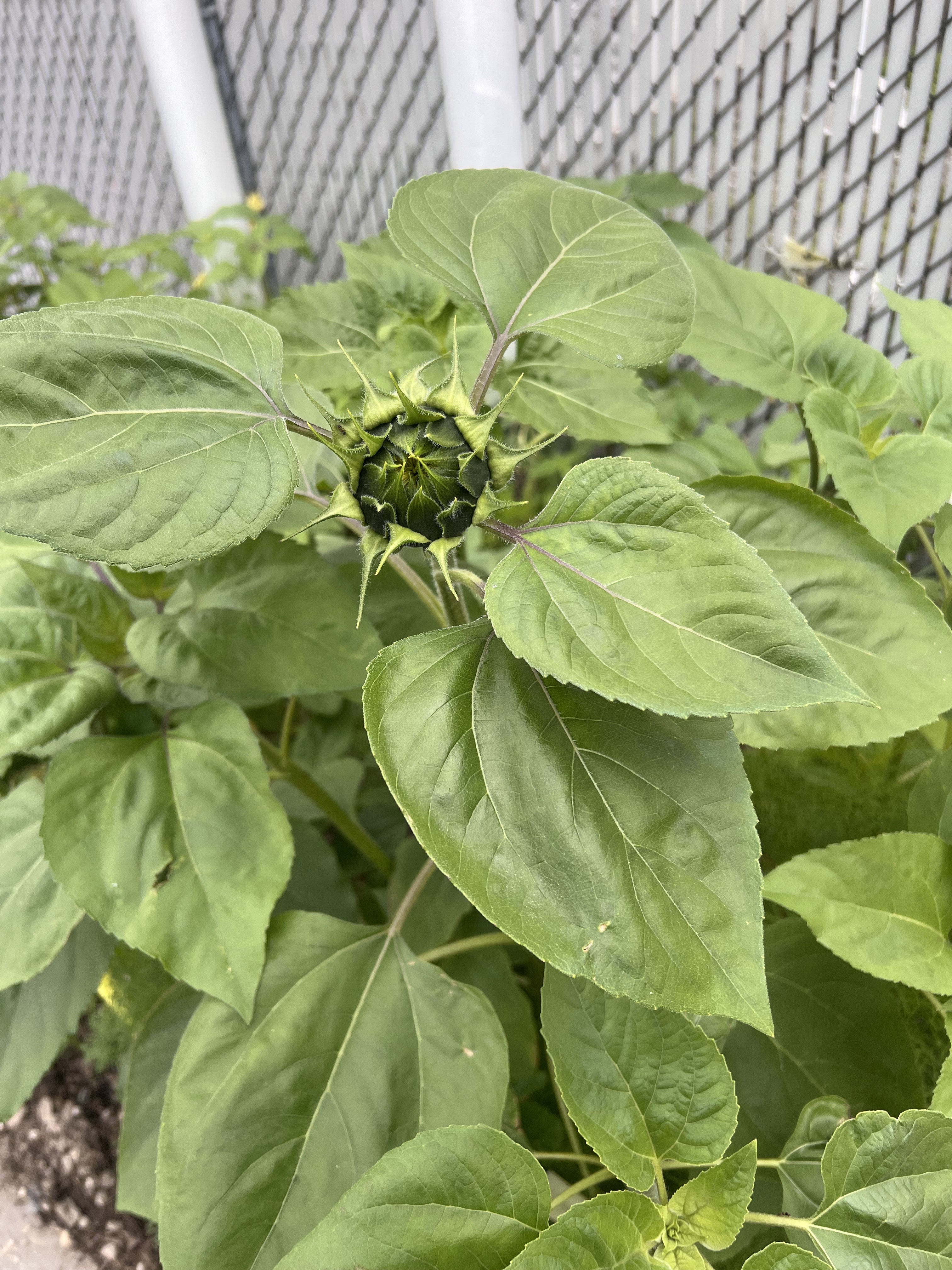
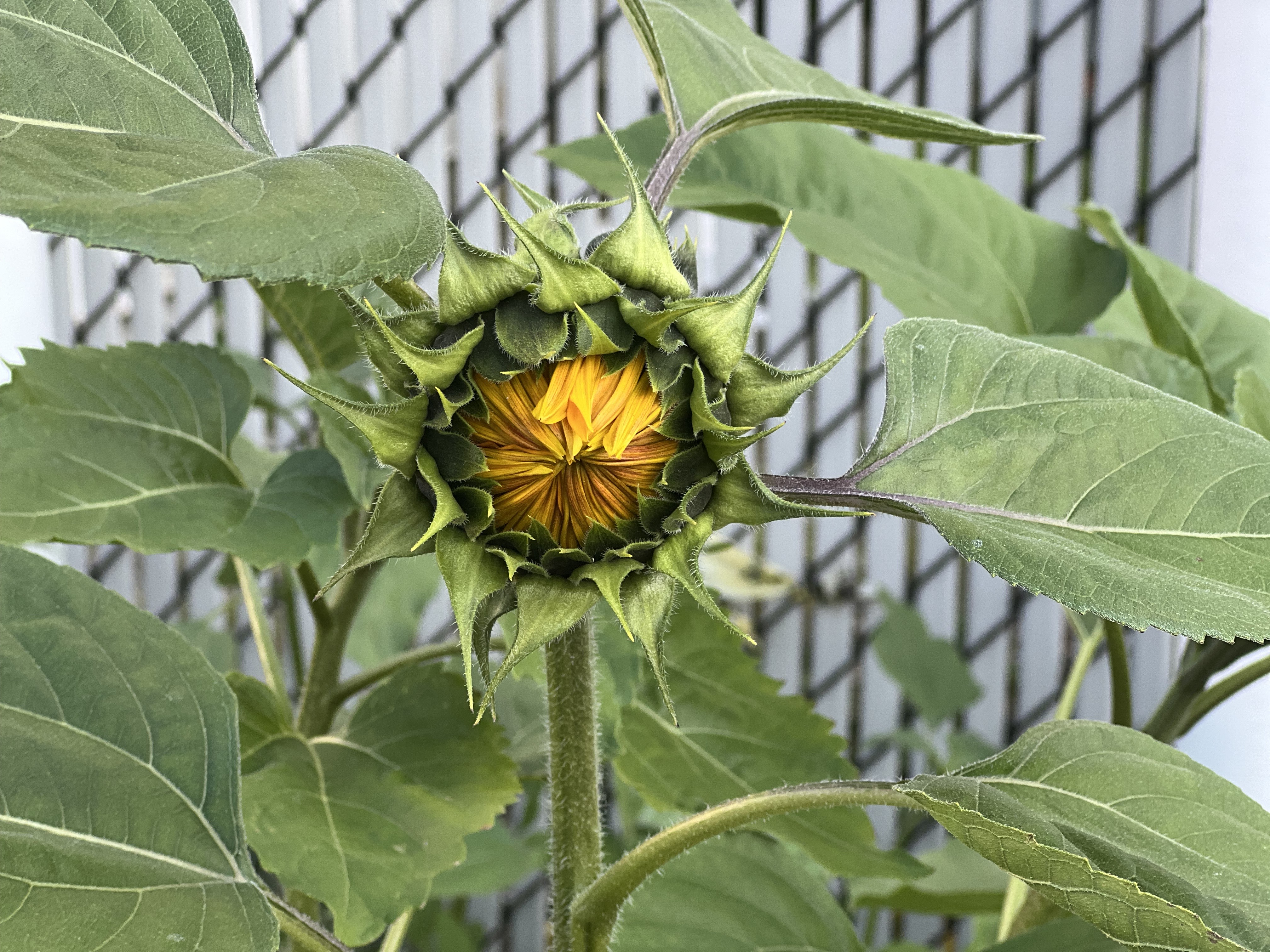
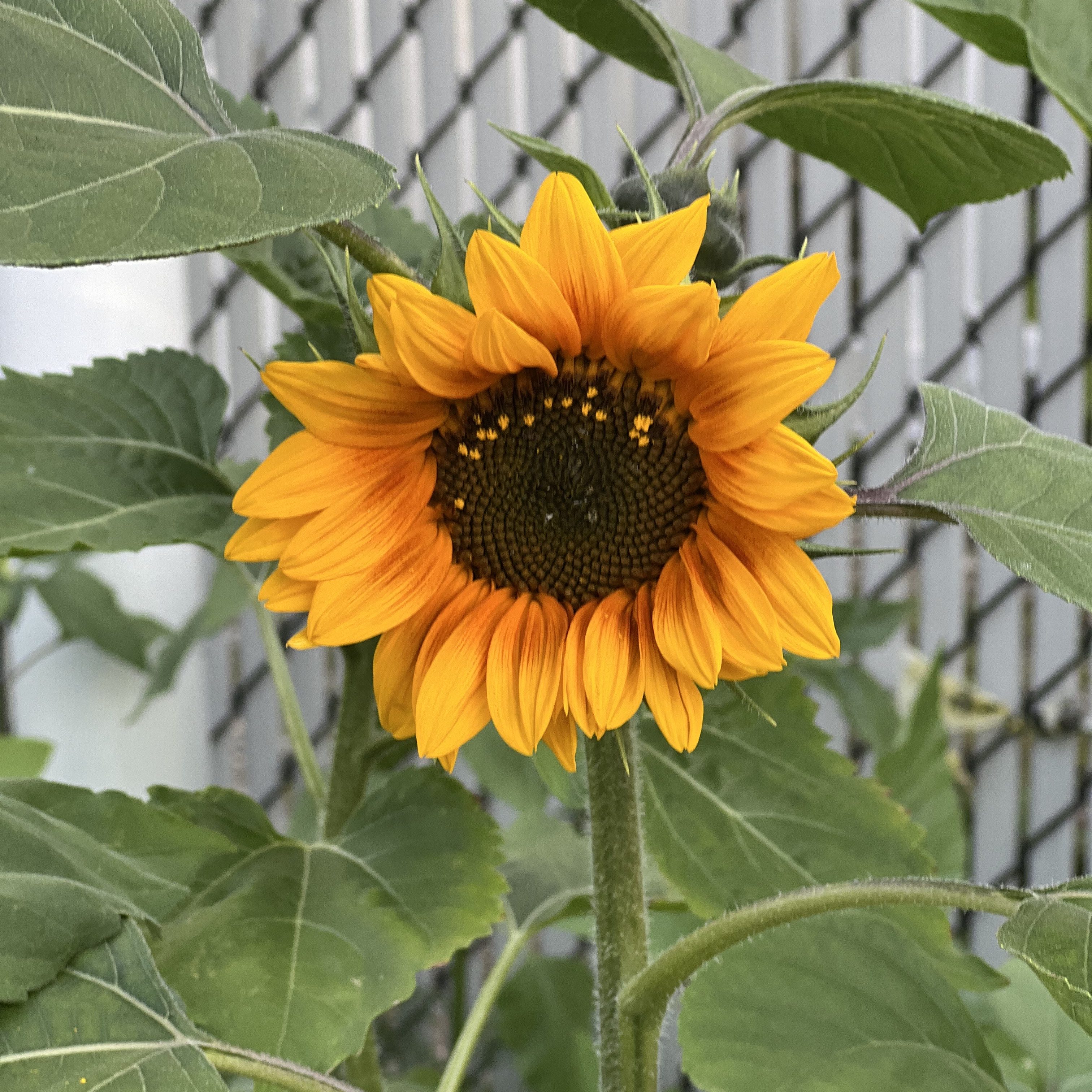
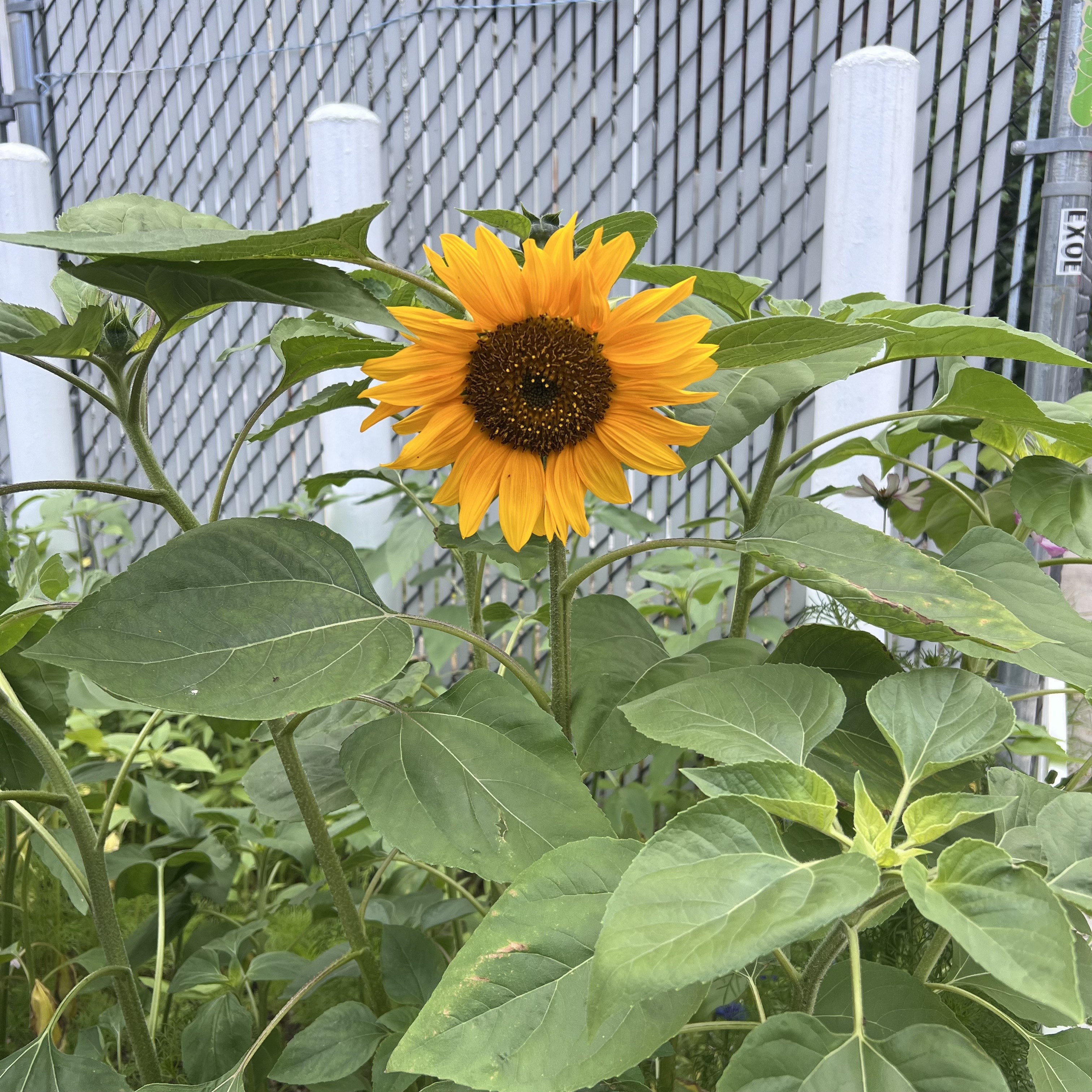
I decided I needed to study gardens more, observe the green spaces around me, and find the pollinators in my neighborhood before I could create my own garden for my pollinator steward certification. At the end of my block there’s a gas station with a 7-Eleven. In front of the air pump at that gas station there’s a patch of earth, maybe 25 feet by 5 feet, that during late fall and through winter is littered with garbage or dirty snow. In the spring, buds sprout from the ground and by summer the area is covered in large yellow sunflowers and pink and orange cosmos. Sunflowers are native to my area and cosmos are not (although not invasive). Together, the sunflowers and cosmos create a pollinator habitat where there wasn’t one before. My point of reference has changed–the corner is no longer where the gas station is but now it’s where the garden grows.
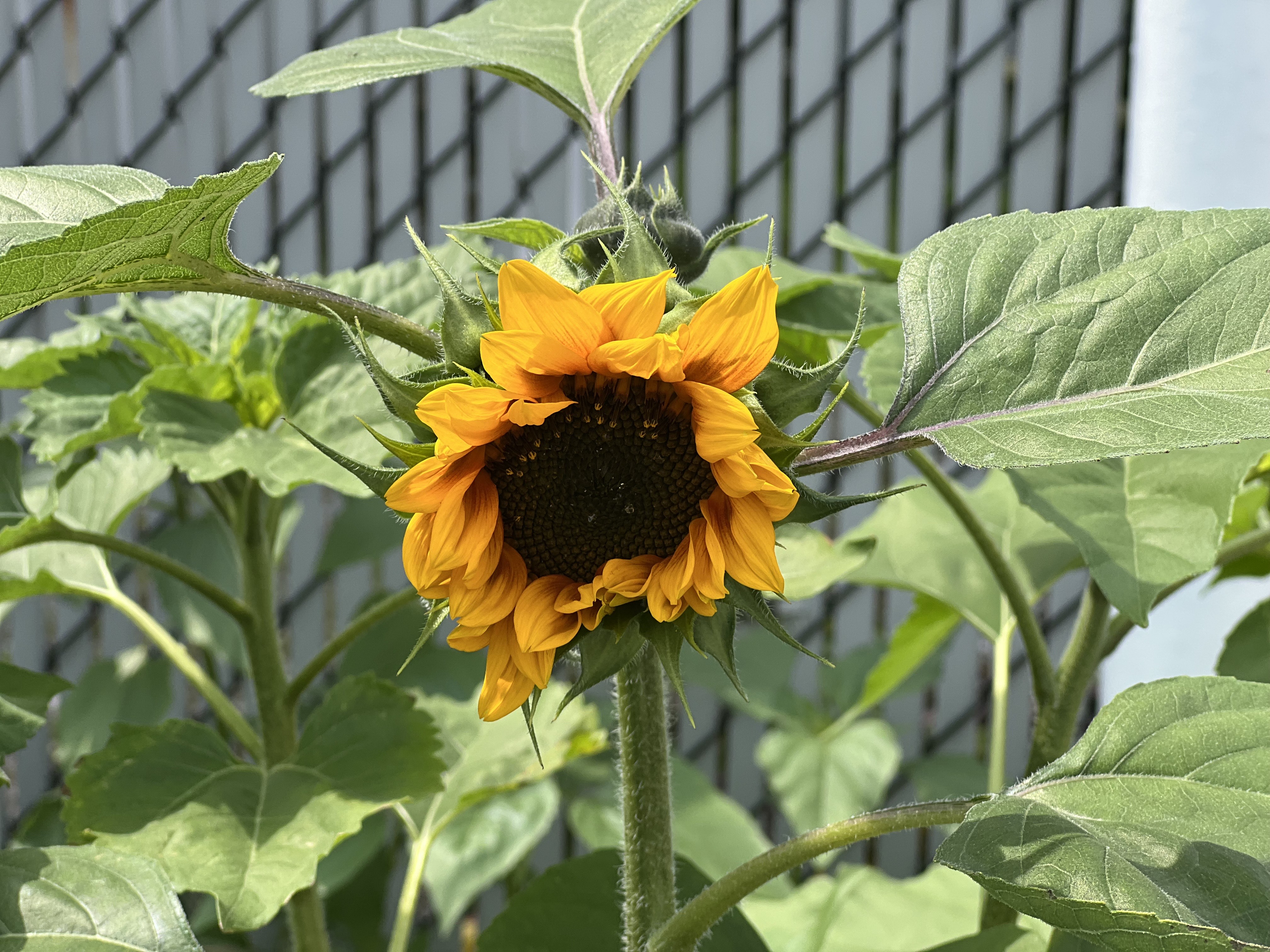
Last year, at the end of the season, I finally saw the person responsible for the garden – a middle-aged Asian American man. He was clearing the space of any evidence he had ever built a garden there. This spring I saw him push the seeds into the soil for this summer’s garden. I saw him again when I stopped to point out to my husband how much the stalks had grown and how close we were to blossoming sunflowers. I squealed at the tiny orange cosmo popping out among the greenery. The gardener chuckled and I smiled at him as I made my way to the subway. In a few weeks, the garden at the end of my block will be in full bloom and the bees and birds will hang out there.
I don’t have gardening experience. I struggle to keep my houseplants alive. I transplanted a plant I’ve had for years into a bigger pot and now it’s dying. It’s showing signs of improvement but the shock was rough (for both of us) and maybe I should’ve left it alone. I’m considering creating a butterfly garden because spotting butterflies in my neighborhood is rare. I haven’t seen a monarch butterfly in my neighborhood in a long time. In general, butterfly populations are down across the country (which I can’t think about too hard because I’ll cry). Whatever kind of garden I end up creating will likely require me to transplant flowers from one space to another. And now I worry about transplanting as a process because I have it in my head, even if it’s not true, that plants feel trauma the way we do, in the sense that trauma changes our DNA.
I don’t know for how long I’ve been living in shock, as far as transplanting goes. I have periods when I feel safe and grounded where I stand, when I feel confident I’m home. Home as a state of being and not just a place. But there are a lot of days when I feel like I’m fighting against my environment just to survive. Obviously, the current political climate (on top of all of the past trauma I already carry) has a lot to do with how unsafe I feel. I’m teaching an immigration literature in the US course this semester and I try to not avoid the news so I can have these conversations with my students. They’re afraid. And it’s difficult for me to not drown in hopelessness.
My classroom this semester has a window facing the courtyard and I’ve been paying more attention to the ways the trees change as I guide my students through the course material. At the start of the semester, the branches were bare, then there were the buds, and then they were covered in pink petals. The trees were probably transplanted to this location to create a natural oasis from the city that surrounds my campus. The trees were likely added to change the vibe from factory to college. The trees are young, their trunks aren’t thick and aged. “I’m a tree,” I say in my head, as I look out the window at one of them waving at me with its green leaves, as my students take their quizzes. On my trips to monarch butterfly sanctuaries I started saying “I’m a tree” in my head or in whispers to try to convince butterflies to land on me. I’d stand still, plant myself firmly on the ground, and whisper. As I think about my students now, about everything going on around us, about the garden I want to create, I think about being a tree. “I’m a tree,” I say softly, into my facemask, during class. “I’m a tree,” I say. Regardless of how I got here, however long I’ll stay, I reach for my roots and force myself to keep growing where I stand.
 Sonia Alejandra Rodríguez